
Training records are usually the part of a laboratory that people take most seriously. Staff complete their courses, supervisors sign off, and somebody keeps a matrix of who can run which method.
So the question that causes trouble is rarely whether the training happened. It is narrower than that. An assessor picks one result from last spring. The question is whether the analyst who produced it held an authorization for that method on that day.
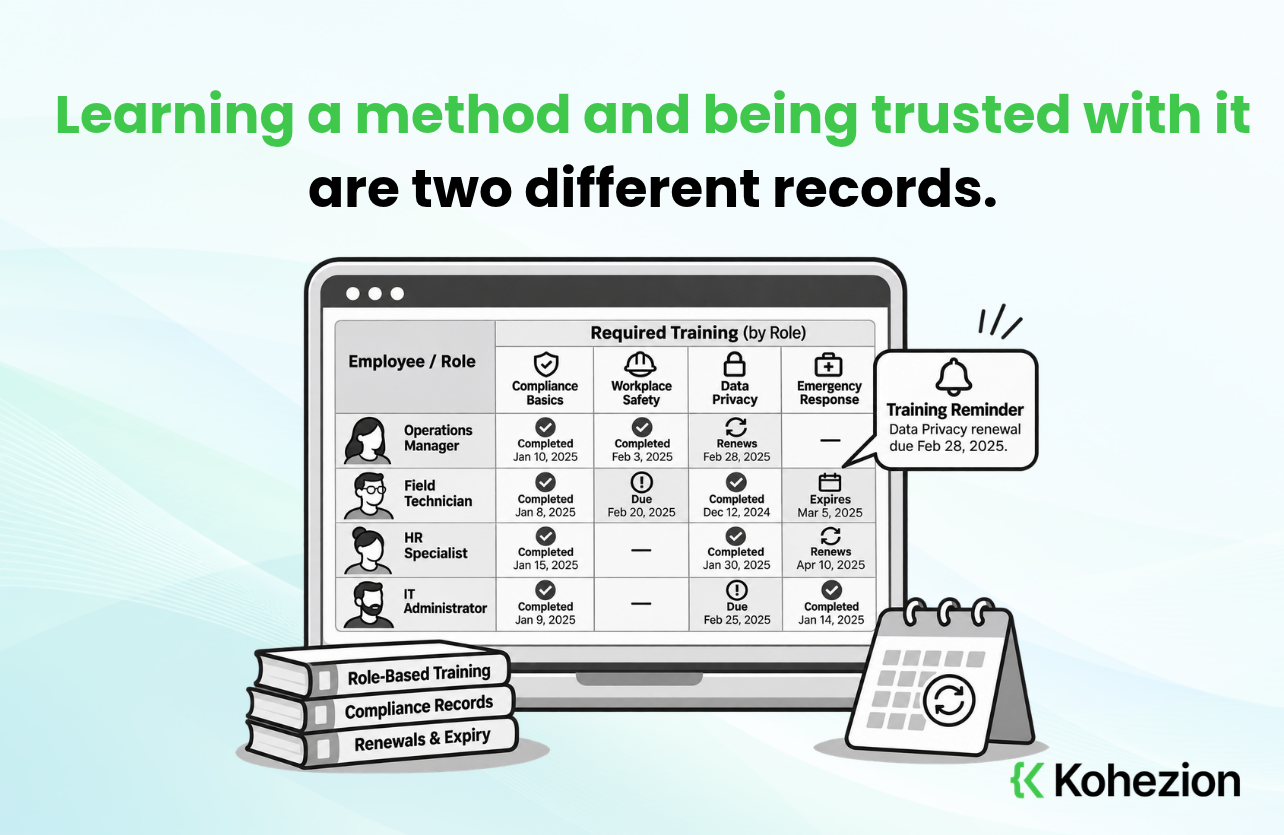
The matrix, however, answers a different question. It tells you who can run the method today, and today is not the day the analyst produced the result.
What do training records need to show?
Training records need to show who held an authorization for which activity, and from when. A complete set covers the training someone attended and their competency assessments. It also covers the positions they held, with the dates of each, and the work they hold an authorization to do.
Of those, authorization carries the most weight. It marks the moment a laboratory trusts someone to do the work without oversight, and an assessor's question about a past result usually turns on it. The World Health Organization's guidance on laboratory personnel records makes the same point about dates: keep the positions someone held, and when they held each one.
Authorization, then, is an event with a date on it. Before that date somebody supervised the work, and after it nobody had to.
Why is a completed course not the same as an authorization?
Because a course shows that somebody learned a method, while an authorization shows that somebody decided to trust them with it. The two often happen weeks apart, and different people sign them.
Picture a research lab bringing a new analyst onto an established method. She finishes the training in March, runs the method under supervision through April, and her supervisor authorizes her in May. Her April results are sound, provided the record shows that somebody supervised them. Equally, an April result with nothing showing supervision is the one an assessor will ask about.
A certificate of attendance cannot tell those two Aprils apart. Only a dated authorization can.
Where do training records usually live?
In several places at once, and each of them is doing something right. The certificate sits in a shared folder, the sign-off sits in an email or a form, and the matrix sits in a spreadsheet that the quality manager keeps current.
That last word is the difficulty. Whenever somebody's status changes, the quality manager overwrites the matrix, so it records the present very well and the past not at all. The spreadsheet is not at fault here, as our piece on spreadsheet limitations argues. It simply answers who can, while the assessor is asking who could.
How should training records connect to the work?
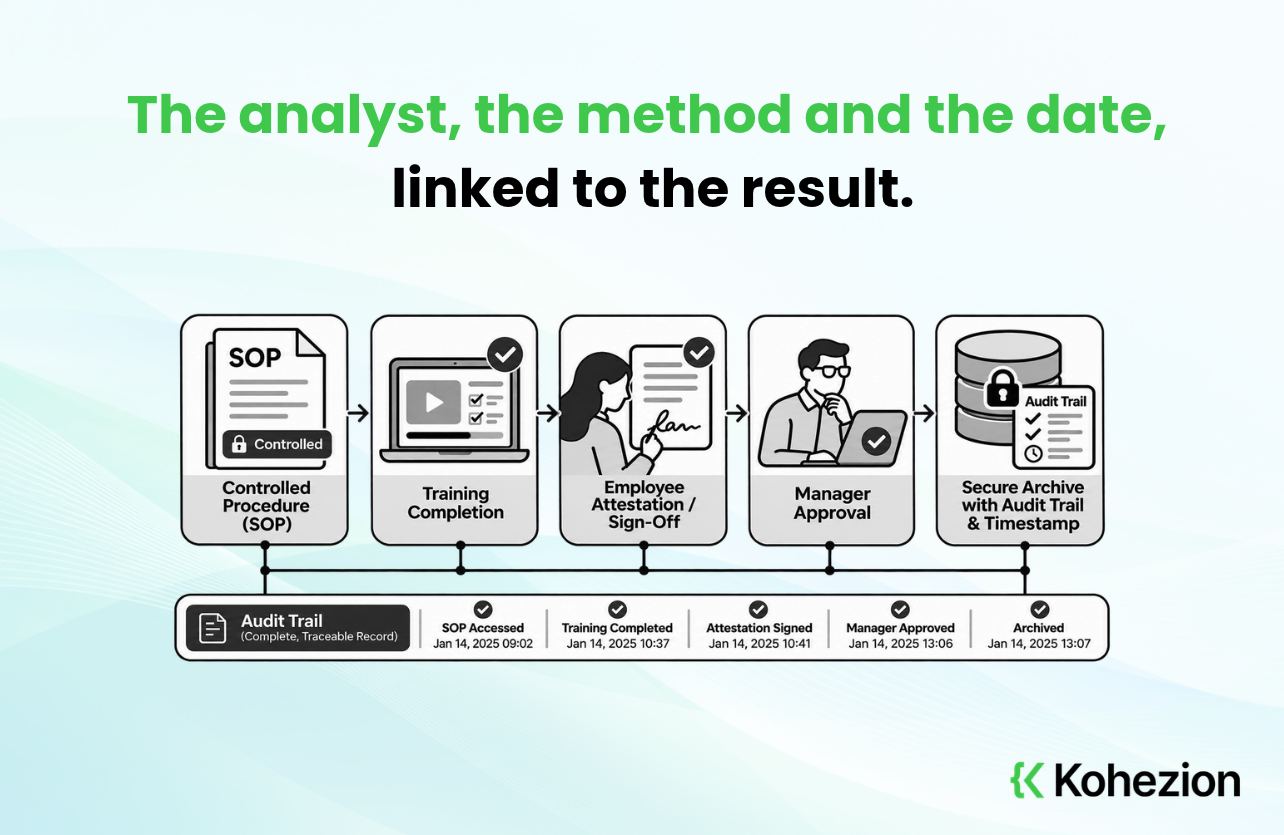
Training records should connect to the work through the result itself. Each result should name the analyst, the method and the authorization that applied on that date. When a result carries the analyst and the method, and the authorization carries the analyst, the method and a date, answering the assessor becomes a search rather than an investigation.
This is a question of structure more than of filing. One analyst holds many authorizations, and one method has many authorized analysts, which is exactly the shape our pieces on linked records and one-to-many relationships describe. Chemical testing labs and bio-pharma quality control labs meet the same shape whenever they need to trace a result back to the person who produced it.
What does a system add to training records?
A system adds memory to training records: it keeps every version of an authorization, so you can see what it said on any past date. In practice, Kohezion keeps every change to a field and every version of a record, so last spring's authorization is still there after it changes. Our piece on changing a database field shows why the value as it stood matters as much as the current one. A few other things help as well.
- You can create the application from the Excel matrix you already keep, so the starting point is your own structure rather than ours.
- Certificates and sign-off forms attach to the record, and Kohezion keeps each version of an attached file.
- Field-level access lets you decide who can change an authorization, separately from who can read it.
- Reminders and automated reports bring upcoming competence reviews to the right person before they fall due.
For a working example, our competency management case study follows an organization that moved its training and competency tracking out of Excel.
None of this decides who is competent. That stays with your supervisors and your procedure. The system's job is to remember what they decided, and when.
Where should you start with training records?
Start your training records with one method: list everyone authorized for it today, then add the date each authorization began and who signed it. Any name without a date is the gap worth closing first.
For the wider picture of the obligations behind records like these, see our piece on compliance obligations. To work through your own records with us, talk to an expert.
